Bird flu arrives in NZ
Mon 20 Jul, 3 months ago
What you can do to help
Guidelines as of 15 August 2026. These guidelines will be updated as more information comes to hand.
Never handle or remove dead wildlife, or those with suspected bird flu.
Be safe when entering wildlife areas and keep your distance from wildlife and do not approach sick or dead birds, fur seals or sea lions.
We are asking everyone to:
Avoid contact with sick or dead birds or any wildlife. If you must make contact, wear protective clothing and gloves, and wash your hands straight away.
Report unusual signs of sick – or mass deaths of – birds, fur seals or sea lions.
Contact the MPI exotic pest and disease hotline on 0800 80 99 66 straight away and follow any instructions.
Symptoms to watch out for include:
• a lack of coordination, tremors, swimming in circles
• twisted neck or other abnormal posture
• inability to stand or fly
• diarrhoea
• difficulty breathing, coughing or sneezing
• swelling around the head, neck and eyes
• cloudiness or change in colour of the eyes
sudden death
Bird flu is a notifiable animal disease so you must report if you have a reasonable suspicion that birds are infected.
If you see three or more sick or dead wild birds, fur seals or sea lions in a group, report it immediately to Biosecurity New Zealand’s Exotic Pest and Disease Hotline on 0800 80 99 66. Provide as much detail to Biosecurity New Zealand as you can, including:
a GPS reading or other precise location information
photographs and/or videos of sick and dead birds
species identity and estimate of numbers affected
note how many are sick or freshly dead, and the total number present.
Biosecurity New Zealand will take details and an incursion investigator will be in contact with you. Follow any instructions from Biosecurity New Zealand for handling of sick or dead wildlife.
Identifying HPAI H5N1 early will help to protect our native species.
At home
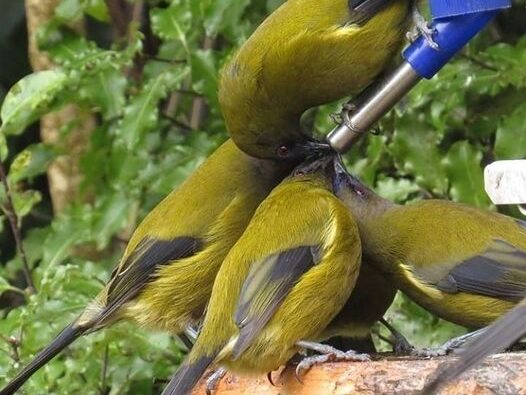
If used Bird Feeders need to be thoroughly cleaned daily. Image credit: Alex H Weller
MPI recommends not feeding backyard birds, as it encourages birds to congregate, putting them at increased risk of spreading bird flu.
Feeding birds in your backyard is a loved pastime for many people, so this will be an adjustment. Planting native trees, shrubs, and flowers is a great way to keep native birds visiting your garden safely. By planting a range of native trees and shrubs, you can provide food sources for a range of different birds.
Keep pets away from wildlife
Cats seem to be very susceptible to severe illness from H5N1 and could contract it from exposure to wild birds.
Keeping cats safe and happy at home minimises the risk of being exposed to the disease, and it’s best for our wildlife too.
If you’ve got your dog with you on the beach or in the bush, keep it on a lead.
Off-lead dogs could come into contact with infected wildlife, putting them at risk.
Phase out eggs and raw poultry as lures in your traps
Raw eggs and bird meat could contribute to the spread of disease.
While the risk is very low for now and there is no official recommendation to stop using these lures, consider phasing them out for now or make sure you use shop-bought eggs. Commercial poultry farms have good controls on bird flu, so they have a low risk of carrying the virus.
As an egg alternative, we recommend egg-based mayonnaise, which is pasteurised and therefore doesn’t pose the same risks as raw eggs.
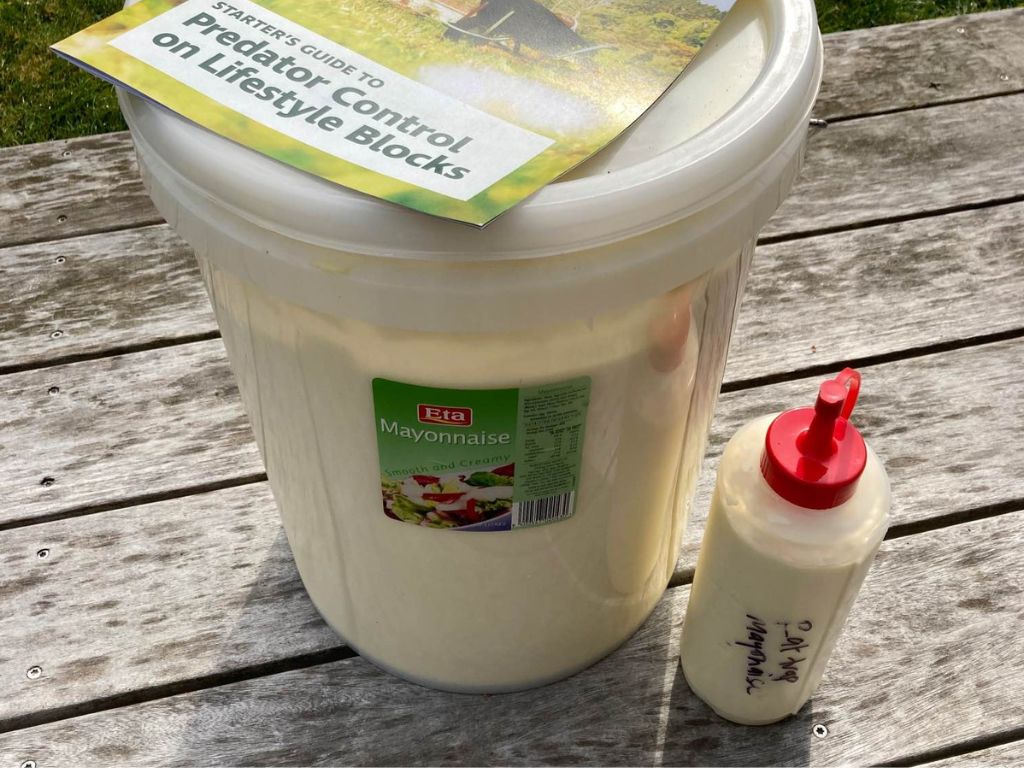
Egg-based mayonnaise is a good alternative to whole eggs. Image credit: Predator Free Tamahere
Keep footwear and clothing clean
When visiting national parks, nature reserves or agricultural areas keep shoes and clothes clean. This reduces the risk of disease spreading between places.